Financial Problems Are Different. Your Options May Be Different Too.
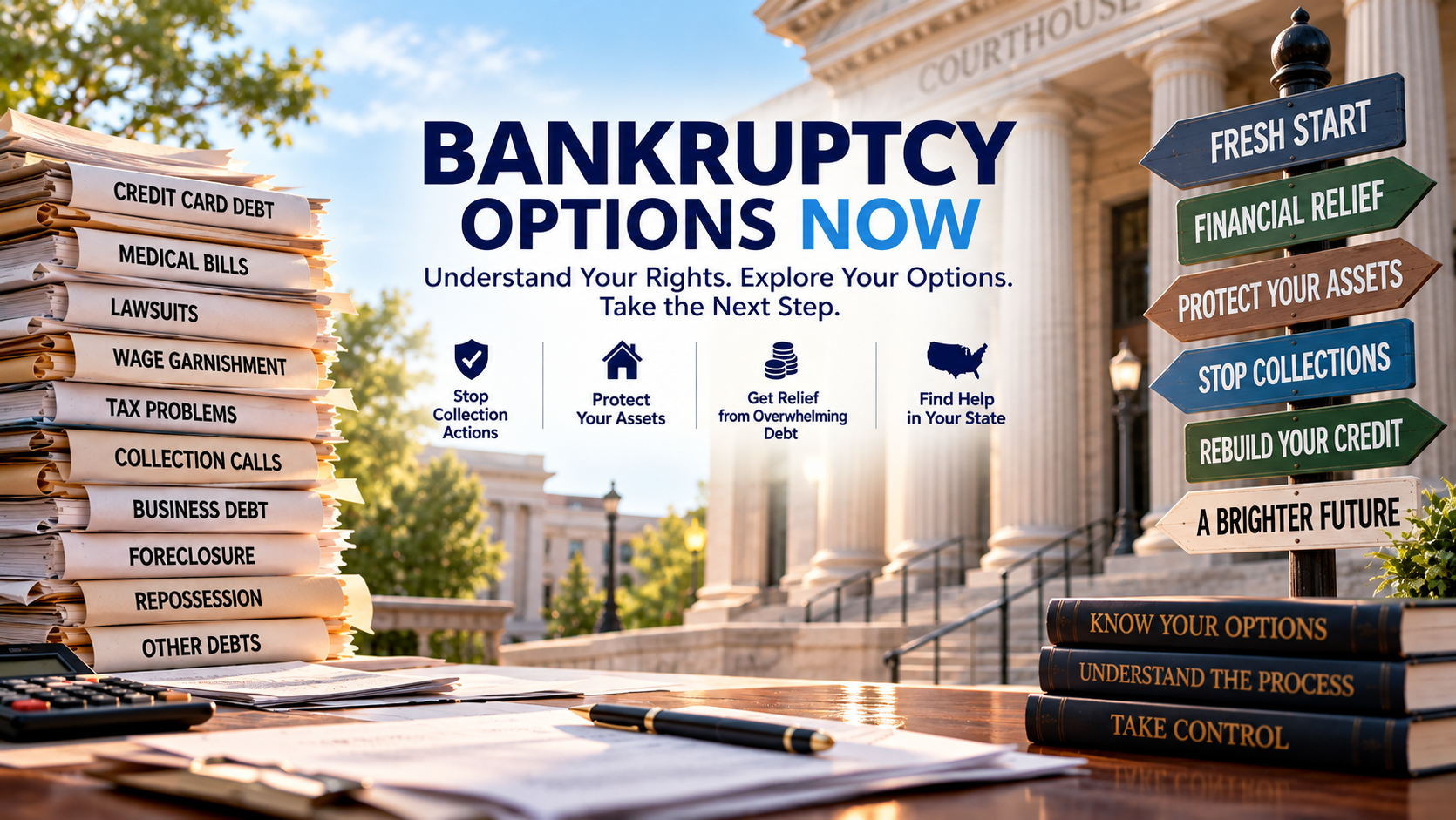
People consider bankruptcy for many different reasons — credit card debt, medical bills, wage garnishment, lawsuits, collection actions, repossession, foreclosure and other overwhelming financial pressures.
Bankruptcy Options Now is designed to help you understand what bankruptcy may do, what it may not do, and which questions to ask before deciding what comes next.
EXPLORE YOUR OPTIONS ↓
Find Bankruptcy Help
Serving Your Area
Enter your ZIP code to find bankruptcy attorneys who serve your area.
What Financial Pressure Are You Facing?
People consider bankruptcy for many different reasons. Start with the problem affecting you to understand how bankruptcy may — or may not — help.
Foreclosure
Behind on mortgage payments or facing a scheduled foreclosure sale? Bankruptcy may affect what happens next.
Credit Card Debt
High balances, interest and minimum payments can make unsecured debt increasingly difficult to manage.
Medical Debt
Hospital bills and other medical expenses can create serious financial pressure even when you have insurance.
Wage Garnishment
If money is being taken from your paycheck, bankruptcy protections may affect certain garnishments.
Lawsuits & Judgments
Being sued by a creditor or facing an existing judgment can change both the urgency and the options available.
Vehicle Repossession
Falling behind on an auto loan or facing repossession can create an immediate need to understand your options.
Debt Collection
Collection calls, letters and creditor pressure may be affected by bankruptcy and the Automatic Stay.
Tax Debt
Some tax obligations may receive different treatment in bankruptcy depending on the type and age of the debt.
Business Debt & Personal Guarantees
Business obligations and personally guaranteed debts can sometimes follow an owner long after a business struggles.
Overwhelming Unsecured Debt
Sometimes there isn't one problem — there are simply more bills and unsecured debts than income can support.
Divorce & Separation Debt
Divorce can leave debts, joint obligations and financial responsibilities that require careful bankruptcy analysis.
Past-Due Rent & Eviction
Bankruptcy may affect some eviction situations, but timing and the stage of the eviction process can matter.
Your Financial Problem Is the Starting Point. Not the Conclusion.
Bankruptcy is not the answer to every financial problem. Understanding what it can protect, what debts it may address and what alternatives may exist can help you make a more informed decision.
Find Bankruptcy Help
Serving Your Area
Enter your ZIP code to find bankruptcy attorneys who serve your area.
One Required Step
Many People Don't Know About
Before an individual bankruptcy case is filed, federal law generally requires approved credit counseling. Knowing about this requirement early can help avoid unnecessary delays if you decide bankruptcy may be your next step.
It Comes Before the Bankruptcy Filing
Credit counseling must generally be completed through an approved agency before an individual files bankruptcy. Limited exceptions can apply.
Find an Approved Credit Counseling Agency
The U.S. Trustee Program maintains the official list of approved credit counseling agencies by state and judicial district.
VIEW THE OFFICIAL DOJ LIST →Opens the U.S. Department of Justice / U.S. Trustee Program website.
Credit Counseling Is One Step.
Your Bankruptcy Strategy Is Another.
Completing credit counseling does not determine whether bankruptcy is right for you. An experienced bankruptcy attorney can evaluate your financial situation, timing, eligibility and the bankruptcy options that may be available to you.
Three Bankruptcy Chapters.
Different Paths Forward.
Chapter 7, Chapter 13 and Chapter 11 can provide very different forms of bankruptcy relief. Which chapter may be appropriate depends on your income, debts, assets, goals and individual financial circumstances.
Chapter 7 Bankruptcy
Chapter 7 is commonly used by individuals seeking relief from qualifying unsecured debts. Eligibility, exemptions, income and the type of property you own can all matter.
Chapter 13 Bankruptcy
Chapter 13 allows eligible individuals with regular income to propose a court-supervised repayment plan, generally lasting three to five years.
Chapter 11 Bankruptcy
Chapter 11 provides a reorganization process commonly used by businesses, but it may also be available to individuals whose financial circumstances call for this type of relief.
The Chapter You File Can Change
What Happens Next.
Bankruptcy is not one-size-fits-all. Understanding the differences between the major bankruptcy chapters can help you have a more informed conversation about your options.